Kalith Healing Gift
Bound by DarknessThe Kalith Healing Gift is a rare Kalith capacity that turns light into healing power. In Larem q’Jones’s hands, it becomes both a practical means of care and a sign of cultural displacement: a gift nearly lost among his people because of the fading light of Kalithia, yet awakened or strengthened by the bright sun of the human world. Its successes are intimate and concrete, but its failures leave Larem carrying grief, exhaustion, and the knowledge that healing cannot always reverse death.
Definition and Origin
Larem explains that the gift is part of his Kalith nature and was lost to his people over generations as Kalithia’s light faded. Under the brighter sun of the human world, he has become what humans would call a healer. The ability therefore joins biology, spirituality, environment, and cultural history. It is not presented as an ordinary medical technique: Larem draws on healing light held deep in his mind and soul, and the power travels through hidden pathways in his flesh and bones before reaching another body.
The gift also distinguishes Larem from the Paladins without separating him completely from them. Laurel Young recognizes that he possesses some of the same healing ability as the Paladins, which helps explain how he survives injuries that would otherwise be more difficult to treat. Yet the resemblance does not erase the biological difference between Kalith, humans, and Paladins. Larem’s blood cannot simply be replaced with human or Paladin blood, and his healing remains an additional resource rather than a complete substitute for medical care.
Methods and Uses
Larem first demonstrates the gift in a quiet act of care for Lacey Sebastian. After she develops a severe headache that ordinary measures have failed to relieve, he asks her to close her eyes, places his fingertips along her forehead and temples, and chants under his breath. He draws from the stored pool of healing light within himself and sends a small stream of warmth through his body into hers. The pain and tension ease almost immediately, and he adds another small burst before asking how she feels. The episode establishes that the gift can be carefully focused, used without elaborate equipment, and directed toward pain relief as much as toward visible wounds.
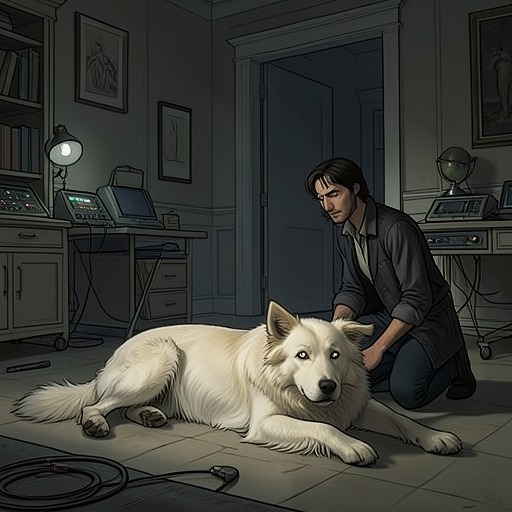
His treatment of Chance shows a more cautious and experimental side of the ability. The injured dog initially distrusts Larem, but after Chance approaches and rests his head on Larem’s knee, Larem places a hand on him and channels the sun’s healing warmth through his body. The light soothes Chance’s pain and encourages the bones in his damaged leg to knit. Larem stops after a minute or two because the gift is still too new for him to know how much healing an animal can withstand, especially one weakened by starvation and trauma. He usually limits himself to easing pain and calming traumatized spirits, recognizing that persuading an injured animal to accept care is itself part of the work.
The gift extends beyond treatment into perception. Larem discovers that it allows him to recognize Sasha Willis’s pregnancy before she has publicly disclosed it. He later tells her that the perception arises from his Kalith nature and from the healer’s transformation brought about by the brighter human sun. The discovery creates a new medical responsibility rather than a private wonder: Laurel plans to arrange obstetric care, while Larem agrees to gather information about Kalith pregnancies from Sworn Guardian Berk because human gestation lasts nine months and Kalith gestation may differ.
After Sasha’s accident, Larem uses the gift in several limited ways. He eases the bruising on her ribs, slows bleeding from cuts, and repairs some damage to her head, but he cannot completely heal her. His actions supplement emergency treatment rather than replacing it; she is transported to a trauma center, while the medical responders follow their protocols and seek information about her health. The contrast defines the gift’s practical place in the human world: it can stabilize and relieve, but it does not make Larem omnipotent or render hospitals unnecessary.
Failure, Cost, and Mortality
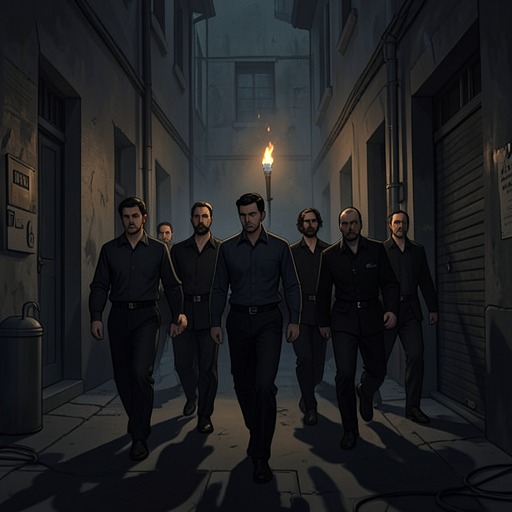
The most devastating test comes when Larem confronts the Others in the tunnels. After killing four Kalith warriors to prevent them from harming Sasha Willis, he gathers one dying warrior into his arms and attempts a formal healing rite. He chants, draws out his medicine knife, raises it toward the ceiling, and asks the gods to share their healing strength. Before he can complete the ritual, the warrior shudders and dies. Larem throws the knife down the tunnel, recognizing once again that his magic has failed him and his people.
This failure gives the gift a tragic boundary. The dead Kalith were already being destroyed by Light sickness, and Larem understands that their lives had effectively ended when the disease first entered their minds. If they had survived the encounter, they would still have faced a brutal death at the hands of the Paladins or through the sickness itself. Healing can postpone pain, close wounds, or support the body, but it cannot necessarily restore a person whose mind and life have been consumed by the larger crisis afflicting Kalithia and its people.
The power also exacts a physical price from its user. When Larem heals Duke after the human is cut, the magic succeeds on its first attempt, but Larem is already tired and the effort takes enough from him that Lonzo Jones must steady him afterward. His exhaustion prevents the gift from becoming an effortless solution to conflict. Each use requires judgment about the recipient’s condition and Larem’s own reserves, and every success can leave him less able to defend himself or protect someone else.
Medical and Political Implications
The gift exists within a world where medicine is never merely neutral. Paladin scans have been used as punishment under Colonel Kincade, prompting orders that diagnostic procedures occur only on a regular schedule unless Handlers judge that additional monitoring is necessary. Against that background, Larem’s healing offers an alternative form of bodily knowledge and care, but it also makes his body and abilities politically significant. The same institutions that need his help must decide how much access, supervision, and trust to grant a Kalith exile.
Larem’s former identity intensifies this conflict. As a Blademate to a Sworn Guardian, he once knew his place in Kalith society and served his people with honor. In the human world, he accepts payment from the Paladins for teaching weapons practice only a few hours each month and resents living on their charity. The healing gift gives him a meaningful contribution, yet it does not resolve his uncertainty about belonging. He considers crossing back into Kalithia even though his death sentence may remain in force, resisting the urge because neither world offers a simple or secure home.
The gift also becomes part of the contested future of Kalith-human coexistence in Seattle. Larem’s ability helps a wounded human, an injured dog, and a wounded Kalith, but the people involved do not receive the same institutional response. Sasha requires human emergency medicine and pregnancy care; a wounded Kalith cannot safely receive ordinary human or Paladin blood; and Larem’s own healing is treated as a resource that must be understood rather than assumed. These differences make the gift a point of contact between bodies and cultures, while also exposing how poorly existing systems accommodate those who fall between established categories.
Narrative Significance
The Kalith Healing Gift makes Larem a figure caught between violence and repair. He is a trained Kalith warrior who kills the Others to protect Sasha Willis, then kneels beside one of the dying enemies and tries to save him. The same character who offers an armed opponent a chance to defend himself later uses his power to close Duke’s wound, and the same healer who comforts Chance cannot prevent a Kalith warrior’s death. The recurring movement from blade to healing hand does not erase violence; it shows the moral residue that remains after violence has become necessary.
The gift’s deepest significance lies in its relation to light. In Kalithia, fading light has made the capacity nearly disappear; beneath the bright human sun, it returns through Larem. That reversal suggests that survival depends not only on inherited identity but also on environment, migration, and adaptation. Yet the gift does not simply make exile fortunate. It binds Larem more tightly to the people who need him while reminding him of the world and traditions he has lost. Healing becomes both a capacity and a burden: proof that he can build a life in the human world, and a living reminder that his people’s damaged world may no longer be able to sustain what he has become.